
Millions of people are using bitcoin to preserve their wealth and build a better future. Most of the world has heard of Bitcoin by now, but doesn’t understand why they should further explore it.
By being here and reading this, you’re already ahead of 99% of people who are making the biggest financial mistake of their lives by ignoring Bitcoin.
In 10 minutes, you’ll be set to start investing in bitcoin.
Why you should care about bitcoin
Why care about bitcoin? Because holding dollars is harming your financial well-being.
Over the past few decades, the cost of food, housing, and education has more than doubled.
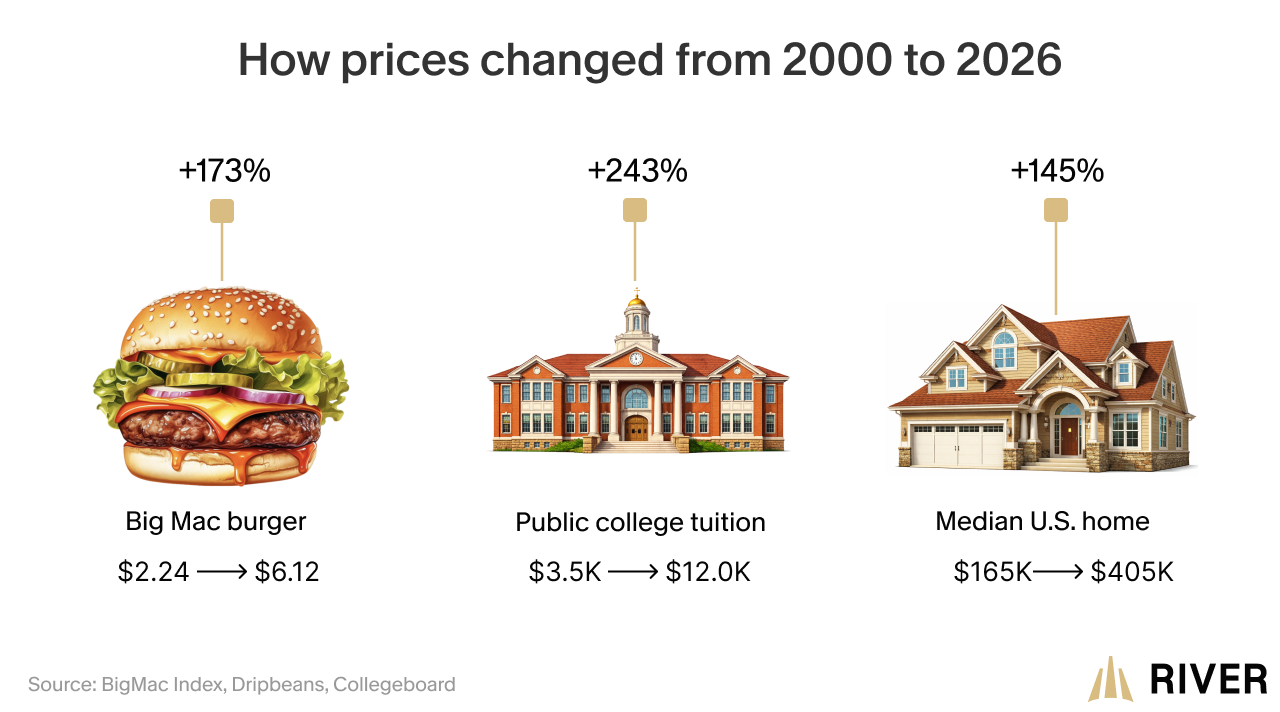
It’s not that these things are becoming more valuable over time. The burger hasn’t become bigger or more nutritious. Education didn’t get way better than it used to be. Houses are made of largely the same materials. So why have costs skyrocketed?
Because US dollars are created, or “printed”, out of thin air.
The government needs to devalue our currency to keep the financial system functioning. As long as the government runs budget deficits, it will continue to print money. They do not have an alternative solution.
The result is a system where the US dollar and all other government-issued currencies are designed to lose value over time. This compounds over time until your money is worth practically nothing.
You’ve probably heard inflation runs around 2.5% per year. That figure (CPI) tracks the price of a specific basket of consumer goods like groceries and gasoline. But the supply of dollars itself has grown much faster: about 5.8% per year since 2000. This is the number that really matters.
The growth in the money supply is the truer measure of how quickly your dollars are being diluted, and it shows up most clearly in the things people actually want to own, such as a home or a college degree. Those have risen far faster than 2.5% a year.
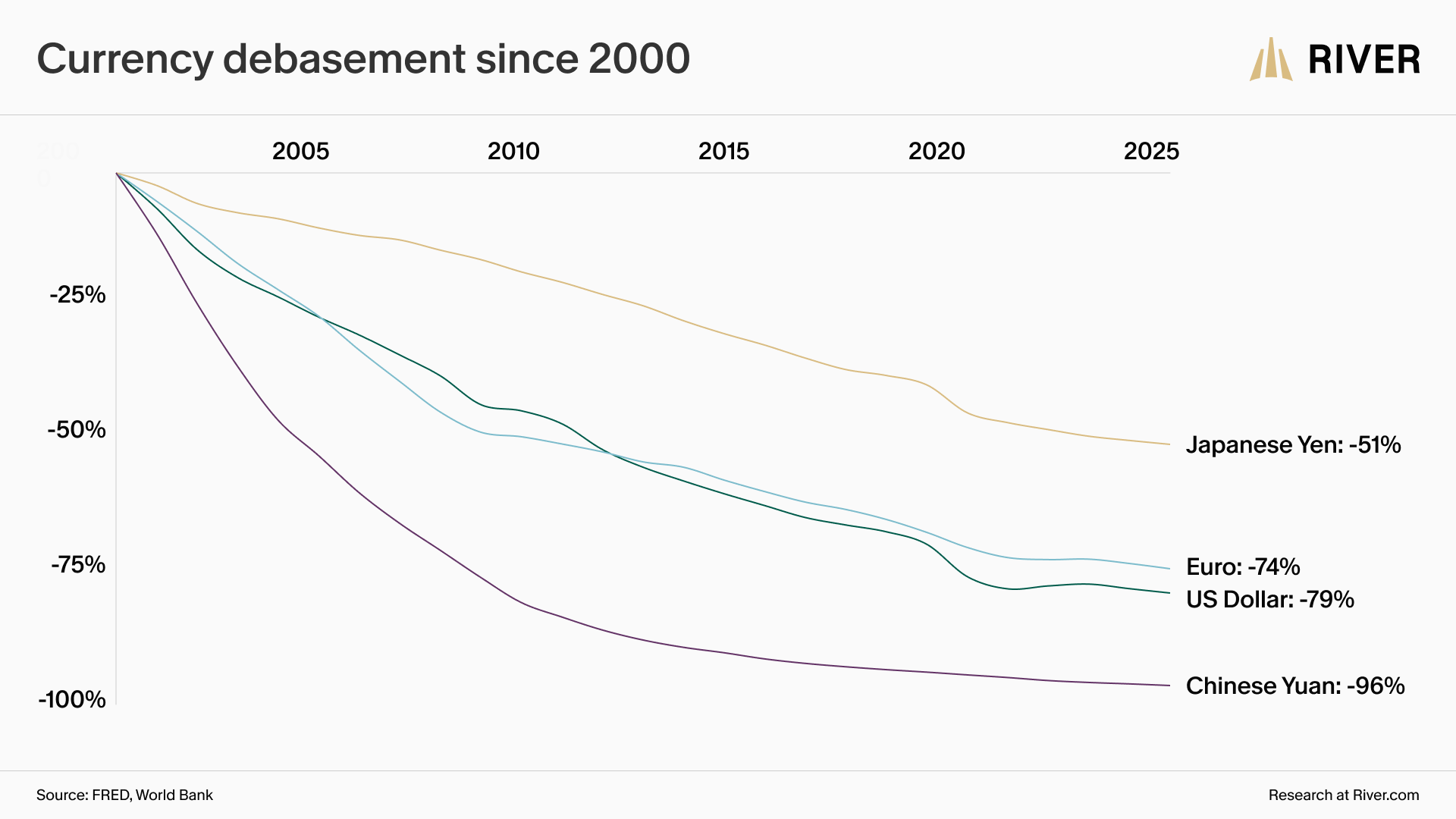
This is the fundamental problem with the US dollar and all other government-backed currencies, and why so many people are turning to Bitcoin as an alternative.
Why bitcoin is the solution to inflation
Bitcoin is the only form of money whose supply is permanently capped. There will only ever be 21 million bitcoin, and there’s only 1 million bitcoin left to be mined.
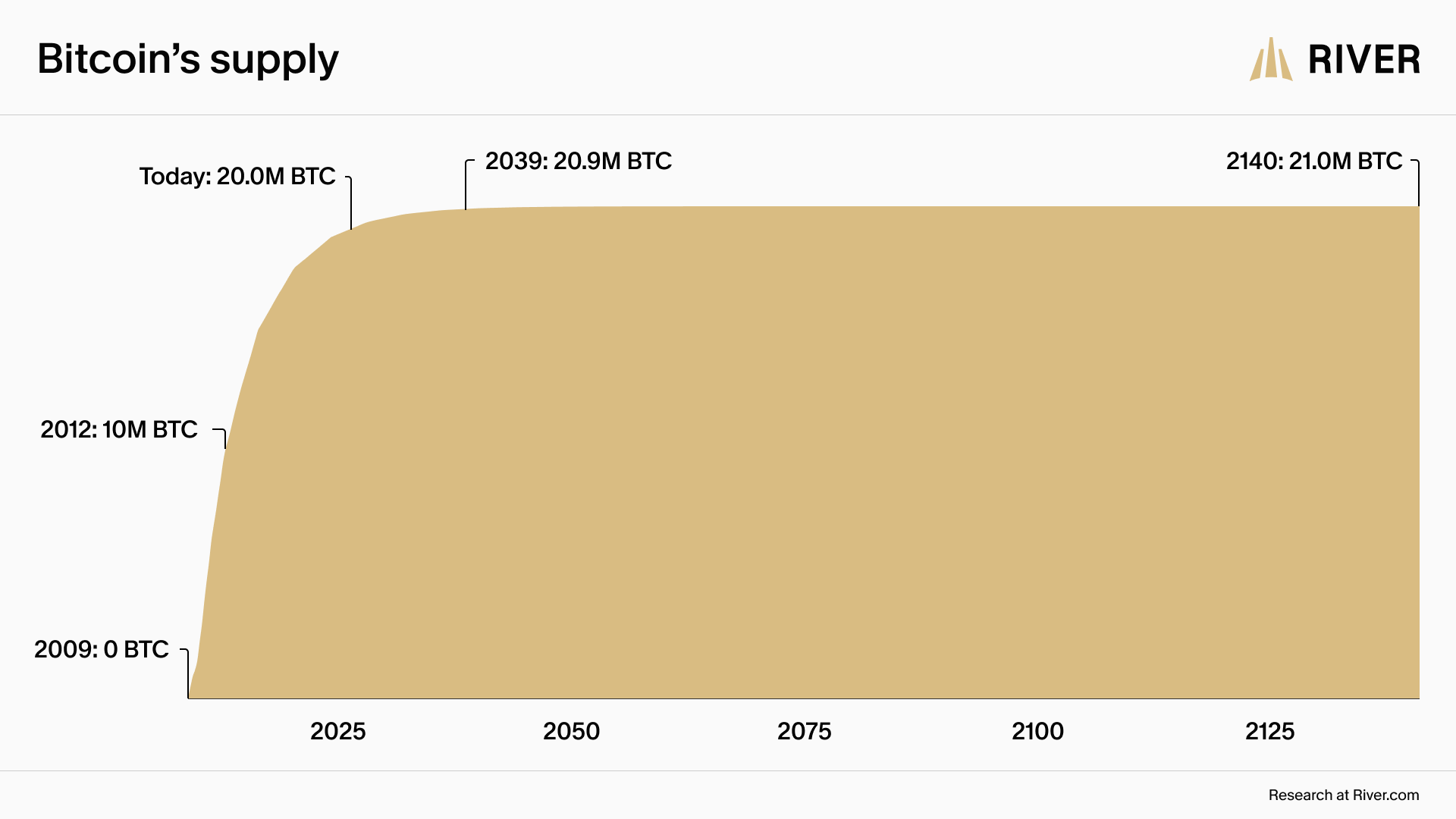
Some people refer to bitcoin as “digital gold”. Just like gold, bitcoin is scarce, does not perish over time, and is recognized worldwide.
But bitcoin outshines gold in many ways:
- Easier to store: Bitcoin can be safely and securely stored on digital wallets that can be saved on a small USB device, backed up in the cloud, or even memorized.
- Easier to send: Bitcoin can be sent to anyone, anywhere, in minutes, with no banks or intermediaries required.
- Easier for payments: Each bitcoin can be divided into 100 million smaller units called “satoshis,” making small transactions effortless.
- Easier to verify authenticity: Every bitcoin transaction is recorded on a public ledger called the blockchain. In Bitcoin’s case, this ledger is secured by an enormous amount of computer power, making it virtually impossible to fake.
- Far more scarce: The supply of gold grows by 2-3% each year, whereas bitcoin’s supply is hard-capped at 21 million coins, written into its code and enforced by its network.
Unlike other cryptocurrencies, Bitcoin is not controlled or owned by any company, government, or individual. It runs on a decentralized network spread across the globe, all working together to validate transactions and secure the network. No CEO can change its rules, no central bank can print more of it, and no single entity can shut it down.
Bitcoin simply exists as open-source code that anyone can inspect, run, or build upon.
This decentralization is what makes Bitcoin truly unique. Even its creator, known only by the pseudonym Satoshi Nakamoto, walked away from the project in 2011 and has remained anonymous ever since. There is no headquarters, no marketing department, and no boardroom.
That’s why bitcoin is the fastest-growing form of money in the world.
As adoption continues to expand globally, bitcoin’s price has historically increased over time. Over the past decade, bitcoin’s price has risen by around 67% per year.
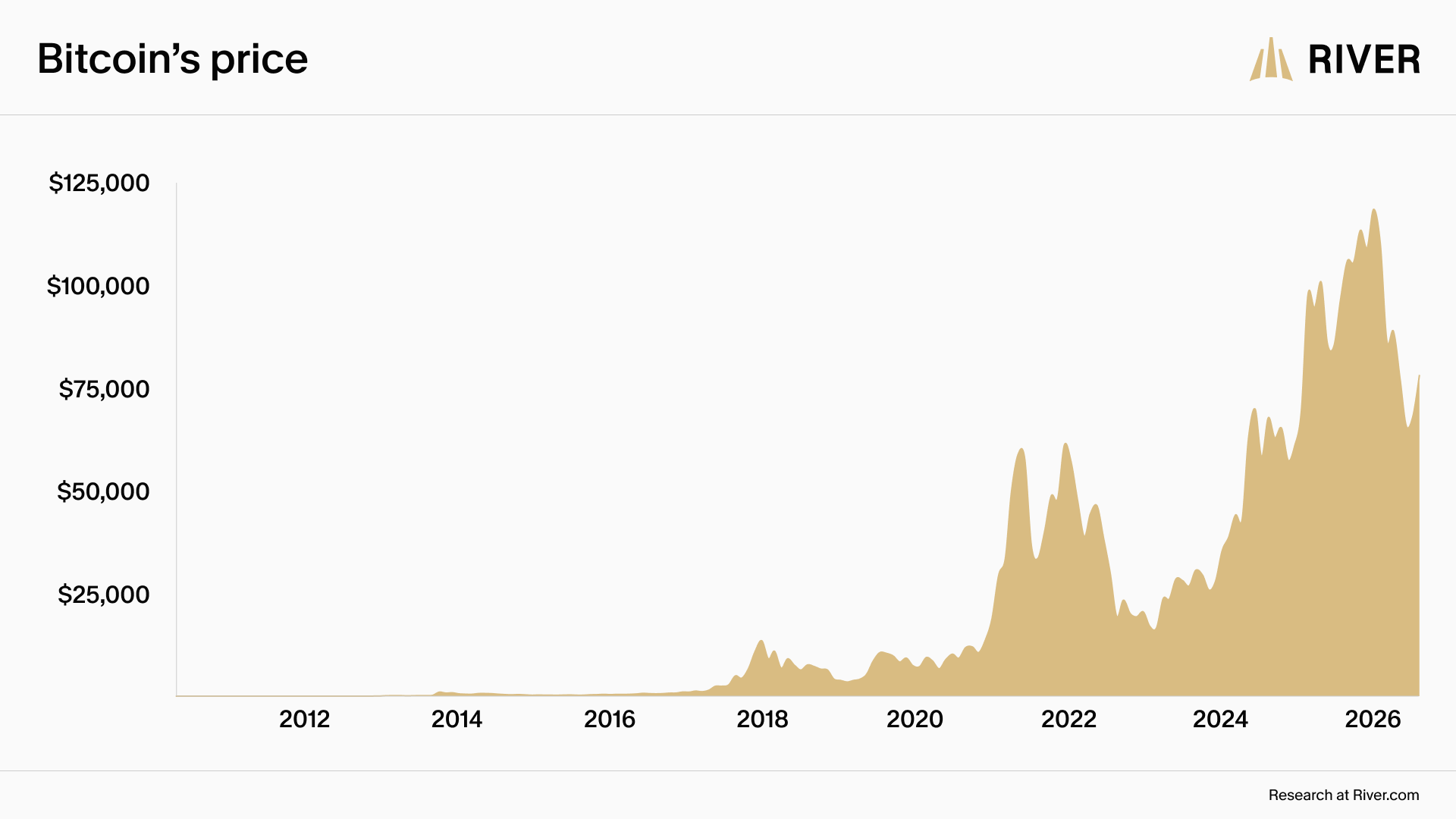
Is bitcoin still a good investment? Or did you already miss your opportunity?
If you’re learning about Bitcoin now, you’re still early. Most global investors are only starting to pay attention.
Why bitcoin is a critical investment in your portfolio
Bitcoin began as an experiment. Ten years ago, it was too immature as a technology to be trusted or taken seriously with large amounts of money for most people.
Over time, Bitcoin has proven itself as one of the most reliable and transparent technologies of our time. As a result, it is now entering the mainstream as a widely recommended addition to investment portfolios:
- JP Morgan, BlackRock, Bank of America, and other Wall Street giants are now recommending a portfolio allocation to bitcoin of more than 1%.
- 90% of Barron’s Top 50 Registered Investment Advisors have a bitcoin allocation.
- 60% of the top 25 banks in the U.S. are building bitcoin products.
Bitcoin is now too large and successful a technology to ignore.
Bitcoin is still just at a fraction of its full potential
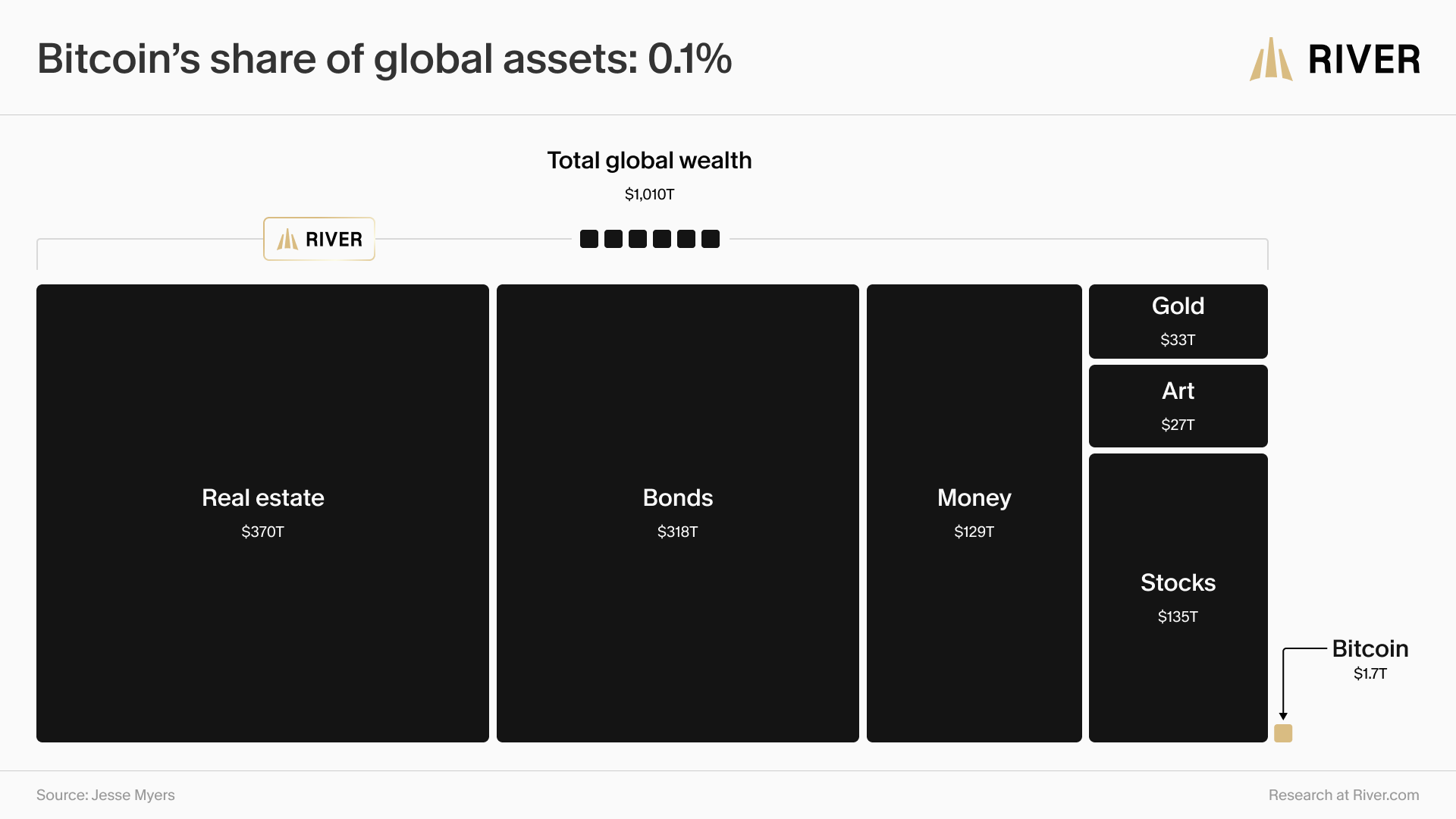
The total value of all bitcoin is roughly $1.3 trillion. That may sound like a lot, but it’s a tiny fraction of other assets like stocks and real estate. In fact, bitcoin is just 0.1% of all global assets.
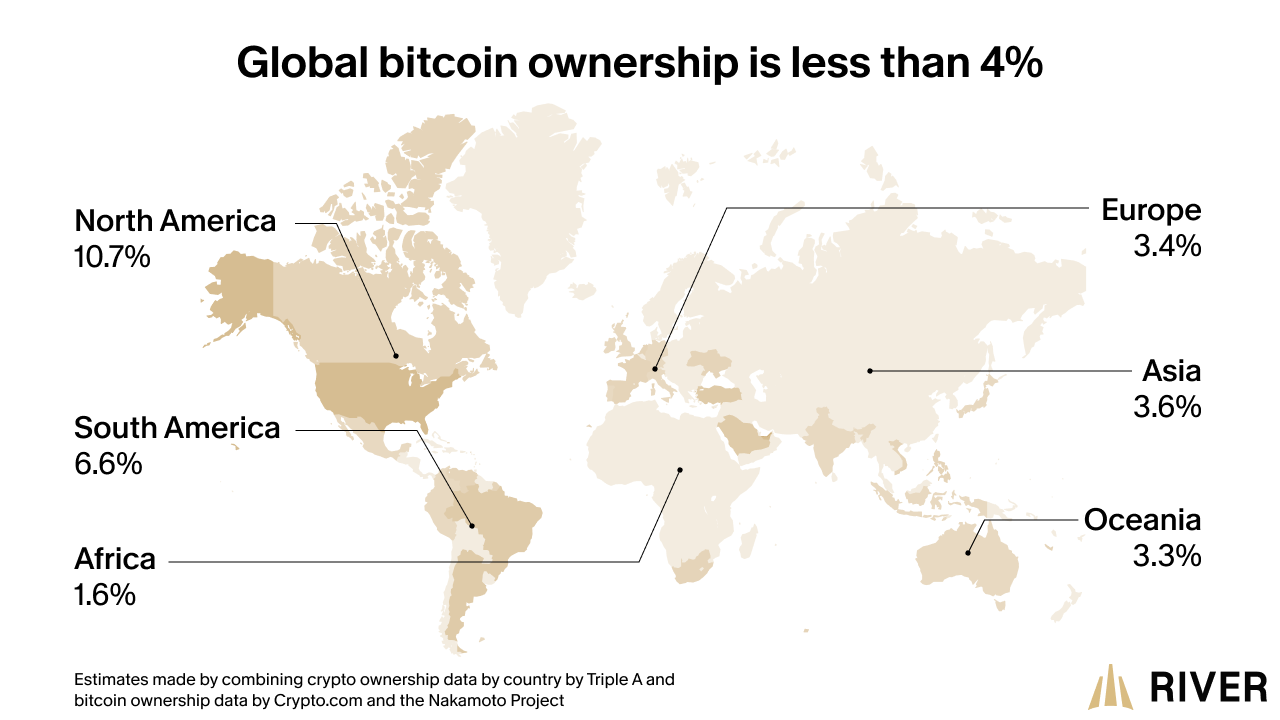
While bitcoin is being rapidly adopted across the globe, it still has a long way to go. Less than 4% of people own any amount of bitcoin.
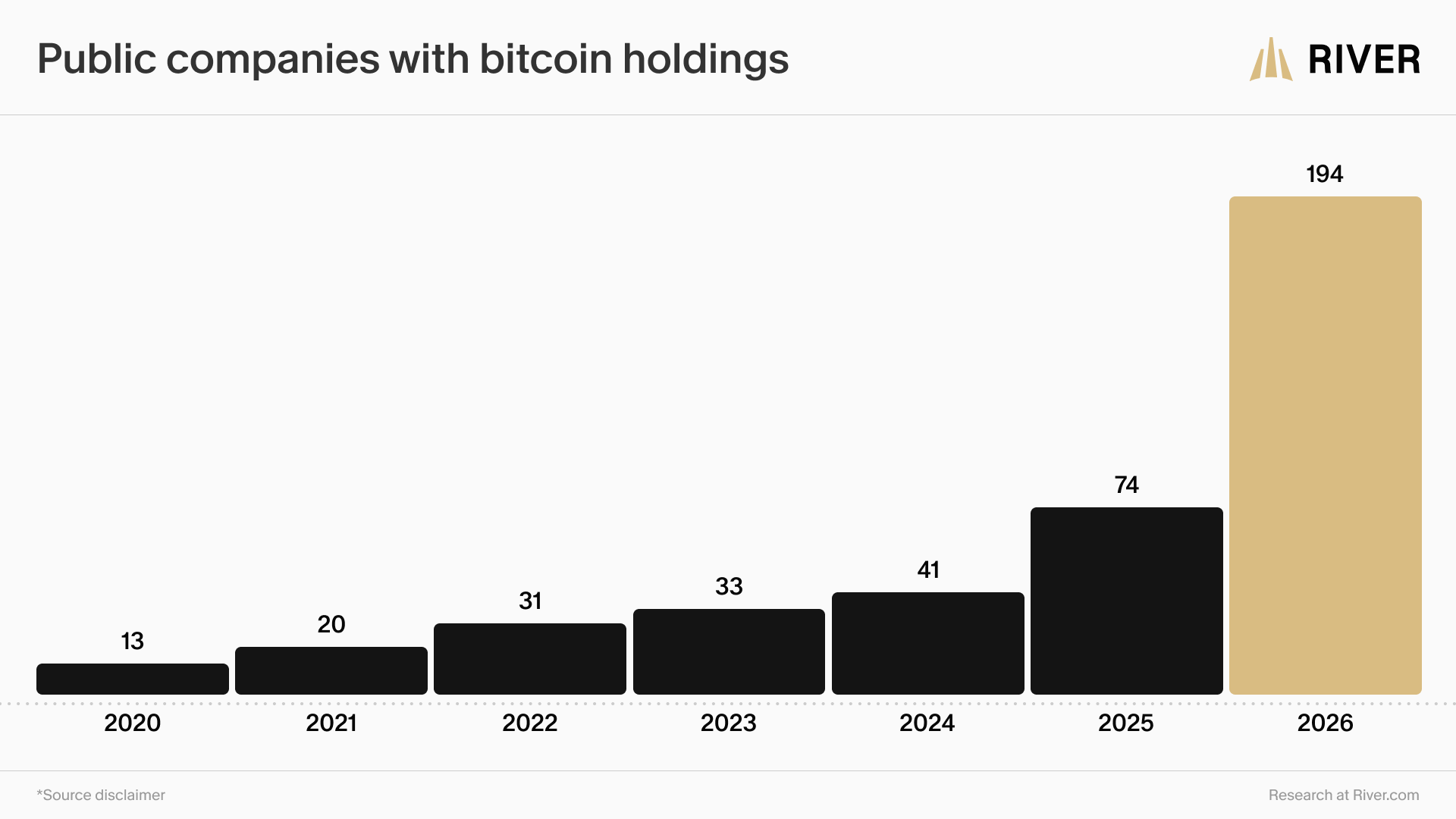
The same is true for businesses and institutions. While more public companies are adding bitcoin to their balance sheets each year, the vast majority have not yet invested.
How to invest in bitcoin
Today, a wide range of platforms, like River and Fidelity, make it easy to buy, sell, and securely hold bitcoin in just a few minutes.
You can buy as little as $1 in bitcoin at a time.
As with any investment, it’s important to understand what you’re buying and choose a platform that prioritizes security, transparency, and ease of use.
River makes it easy to invest in bitcoin while giving clients industry-leading security and transparency. You can sign up and begin investing in bitcoin with River in minutes.
Common questions and concerns about bitcoin
If you’re new to Bitcoin, it’s natural to be skeptical. Below are some of the most common concerns and misconceptions.
How does Bitcoin actually work?
Bitcoin is a technology that can be difficult to understand at first, because it involves many moving parts working together. At a high level, Bitcoin is a global network of computers that maintain the rules for how the monetary system works, and a single shared record of every transaction, without any bank, company, or government in charge.
If you are looking for a deep dive on all of the pieces that make Bitcoin work, River Learn is a great place to start. We recommend starting with the following articles:
Why is bitcoin volatile?
Bitcoin is still a relatively new and emerging asset, so its price is naturally more sensitive to changes in demand and breaking news when other financial markets are closed. As adoption grows and the market matures, volatility has historically decreased over time. Read more about bitcoin’s volatility.
Do criminals use bitcoin?
A common criticism of Bitcoin is that it can be used by criminals for money laundering, illegal commerce, and ransomware. While it is possible to use Bitcoin for anything, using it for crime is a remarkably poor choice because transactions are recorded permanently on a public ledger. What criminal would want to leave permanent evidence? Read more about bitcoin and crime.
Will the government ban Bitcoin?
Most countries are embracing Bitcoin rather than trying to ban its use. Governments are increasingly creating clear regulatory frameworks
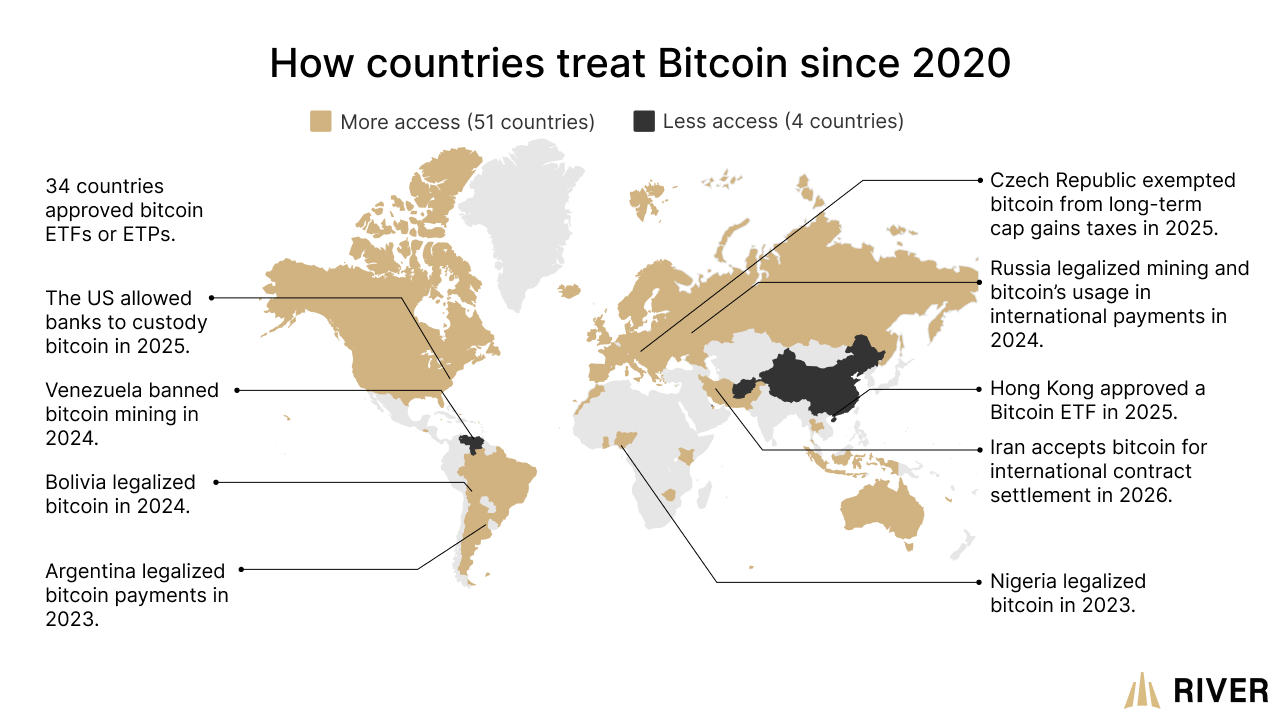
If a country bans bitcoin, the network continues to operate globally, and bitcoin activity continues on alternative markets.
While regulations can affect how people access bitcoin, they have historically strengthened its legitimacy and integration into the financial system. Read more about how Bitcoin cannot be stopped.
Is bitcoin safe to own, or can it be hacked?
The Bitcoin network itself has never been hacked. However, individuals can lose funds if they don’t store their bitcoin securely or fall victim to scams. Security ultimately depends on how you store and manage your bitcoin. Read more about Bitcoin’s security.
Is Bitcoin bad for the environment?
Bitcoin uses energy to secure its network, but this energy use is often misunderstood. A significant and growing share of Bitcoin mining is powered by excess renewable energy that would otherwise be wasted.
Bitcoin mining is highly mobile and naturally gravitates toward the cheapest energy sources, which are often surplus or stranded energy. Read more about how Bitcoin uses energy.
Will quantum computers break Bitcoin?
Quantum computing is sometimes discussed as a potential risk in the distant future, but it is not a near-term threat. Today’s quantum computers are far from powerful enough to break Bitcoin’s cryptography, and the network can be upgraded over time if needed. Like other critical technologies, Bitcoin is expected to adapt alongside advances in computing. Read more about quantum computing and Bitcoin.
Is Bitcoin a Ponzi scheme?
No, Bitcoin is not a Ponzi scheme. Ponzi schemes rely on a central operator who promises returns and pays early participants using money from new investors. Bitcoin has no central authority, makes no guarantees of returns, and operates as an open, decentralized network. Read more about why Bitcoin isn’t a Ponzi Scheme.
Topics to level up your Bitcoin knowledge
If you’re interested in going deeper, here are a few topics worth exploring as you continue learning about Bitcoin:
What are bitcoin ETFs?
Some investors choose to gain exposure through Bitcoin ETFs, which are traditional investment products that track bitcoin’s price. While ETFs can be convenient, they don’t give you direct ownership and come with management fees that stack up over time.
Buying actual bitcoin means you own it directly and have the choice to store it yourself, giving you full control over your money without relying on an intermediary. Read this article to learn more about bitcoin ETFs.
How do I store bitcoin securely?
Unlike money in a bank, bitcoin puts you in control of your own wealth. This means how you store your bitcoin is one of the most important decisions you’ll make. The two main approaches, holding it yourself or using a trusted platform, each come with their own tradeoffs around security, convenience, and responsibility. Choosing the right one for your situation is worth understanding before you accumulate a meaningful amount.
Navigating Bitcoin Storage is a recent report that provides a comprehensive overview of this topic.
What about other cryptocurrencies?
The success of Bitcoin has generated many imitations and spin-offs. Some have genuinely attempted to recreate or extend Bitcoin’s innovation on money, while others have been nothing more than affinity scams, playing off of Bitcoin’s reputation to attract investors.
These other cryptocurrencies may appear to threaten Bitcoin in a variety of ways. However, Bitcoin has a few key properties that no other cryptocurrency can recreate. To learn more about this topic, we recommend beginning with this article on Bitcoin vs Crypto.
Bitcoin and taxes
In most countries, including the United States, bitcoin is treated as property for tax purposes, not currency. This means you generally owe taxes when you sell, trade, or spend your bitcoin at a profit, similar to stocks or real estate.
If you hold bitcoin and its price increases, you typically won’t owe taxes until you sell. However, once you do, any gains may be subject to capital gains tax, with rates depending on how long you held it.
Because tax rules can vary and become complex quickly, it’s important to understand how they apply to your situation.
For a deeper breakdown, read our full guide: Understanding Bitcoin Taxes
The history and future of Bitcoin
Bitcoin has a fascinating history. It began with the release of a white paper in 2008 by the pseudonymous creator Satoshi Nakamoto, and grew from a small open-source experiment into a global monetary network. To learn more about Bitcoin’s origins and the mystery behind its creator, read Who Is Satoshi Nakamoto?.
Today, Bitcoin has moved far beyond its early years. It is increasingly being adopted by individuals, businesses, Wall Street institutions, and even nation-states as a serious form of savings and a new kind of financial infrastructure. For a deeper look at where Bitcoin stands today and how adoption is accelerating around the world, read our recent report.