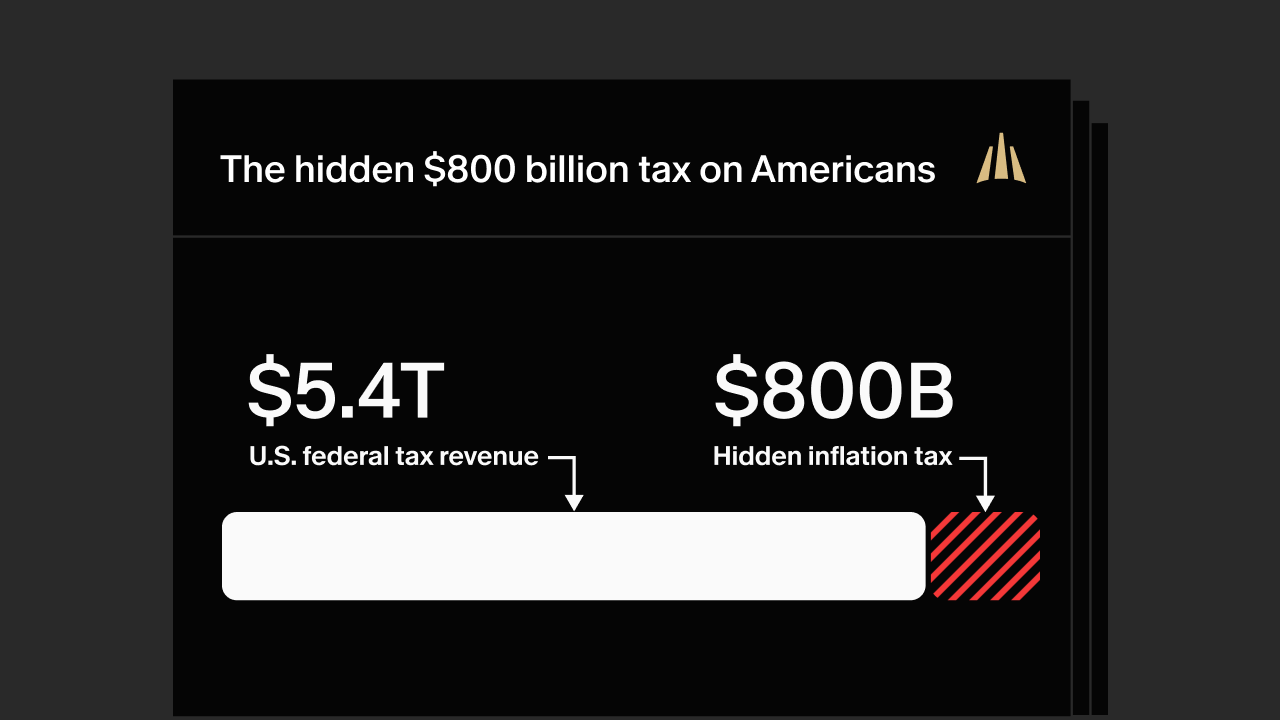
Inflation is a form of taxation that you don’t vote for, and doesn’t show up on your tax returns.
It will cost every household $6,000 this year, before accounting for the inflation that is hidden from you, and the downstream effects on society.
Here’s what this hidden tax is doing to your life.
What is inflation?
An ECON 101 textbook tells you that inflation is a single number reported by the government. It represents the rise in price of a basket of goods and services over the past year.
Since 1970, this number has averaged 4% each year. With compound growth, 4% yearly inflation means that prices double every 18 years.
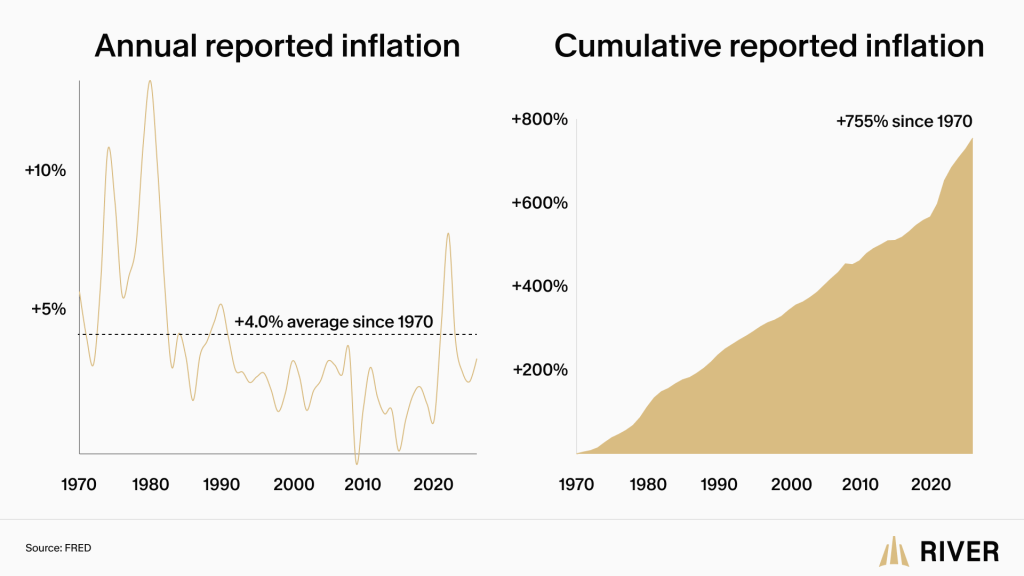
While this looks bad, the reality is much worse. By stating inflation as a single number, the government is hiding how much harm it’s actually causing you.
Inflation hits essentials the hardest
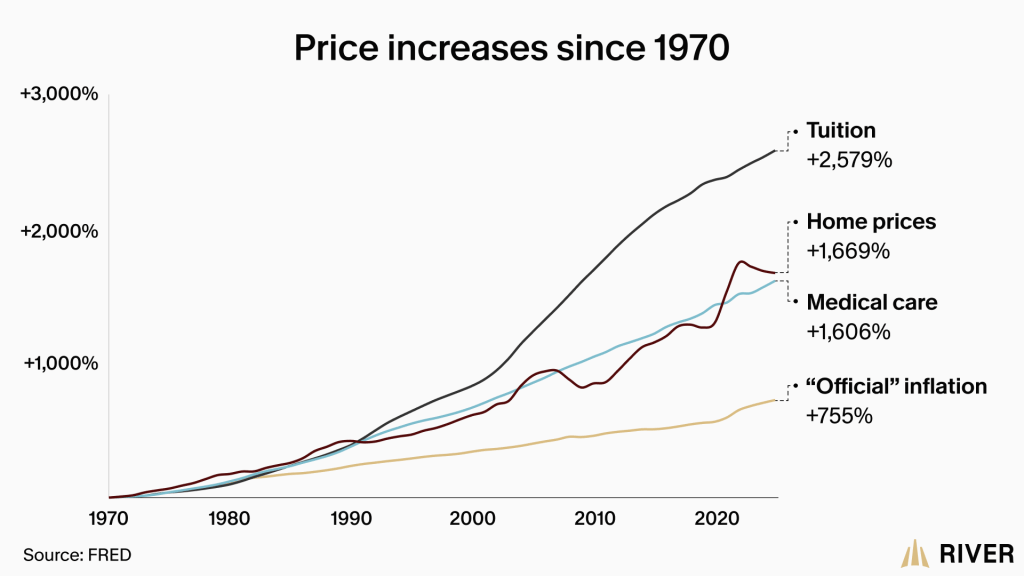
Some prices rise much faster than the official inflation rate. Typically, these are things people can’t afford to live without, like healthcare, education, and housing.
How they hide inflation from you (2 ways)
When companies raise prices, it typically hurts their sales. It’s often easier for companies to hide inflation by reducing the size of a product while keeping the price the same. You’re paying more for less without knowing it. This is known as shrinkflation.

Manufacturers can also hide inflation by using cheaper inputs. Same price, worse ingredients or services.
Examples are everywhere:
- Hotels dropping daily housekeeping
- Airbnbs charging “cleaning fees”
- Airlines charging for carry-on bags
- Food producers replacing butter and olive oil with vegetable oils
- Chatbots replacing humans
- Restaurants replacing table service with QR codes
- Ice cream made with artificial milk substitutes
Inflation shouldn’t exist in the first place
Inflation is also hidden from you because prices should be declining over time, not rising.
Economic productivity has risen by around 2% each year over the past century. If we’re becoming more efficient at producing things with the same resources, why aren’t prices coming down?
Where inflation really comes from
Politicians love to blame inflation on everything but themselves. They will tell you it’s corporate greed, supply shocks, price gouging, and “emergency circumstances.”
But these are just short-term effects. Over the long term, inflation comes from the government creating new money.
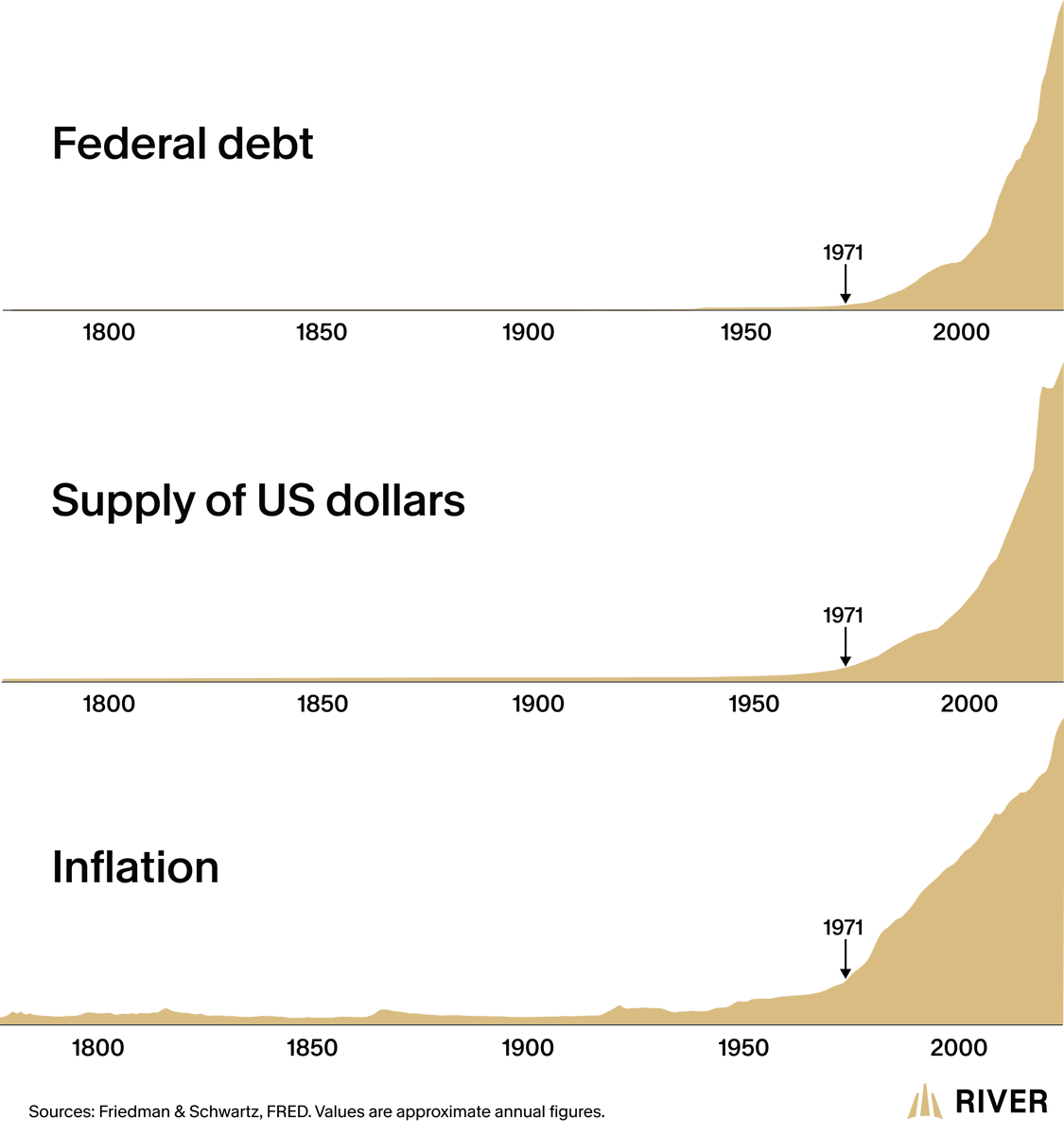
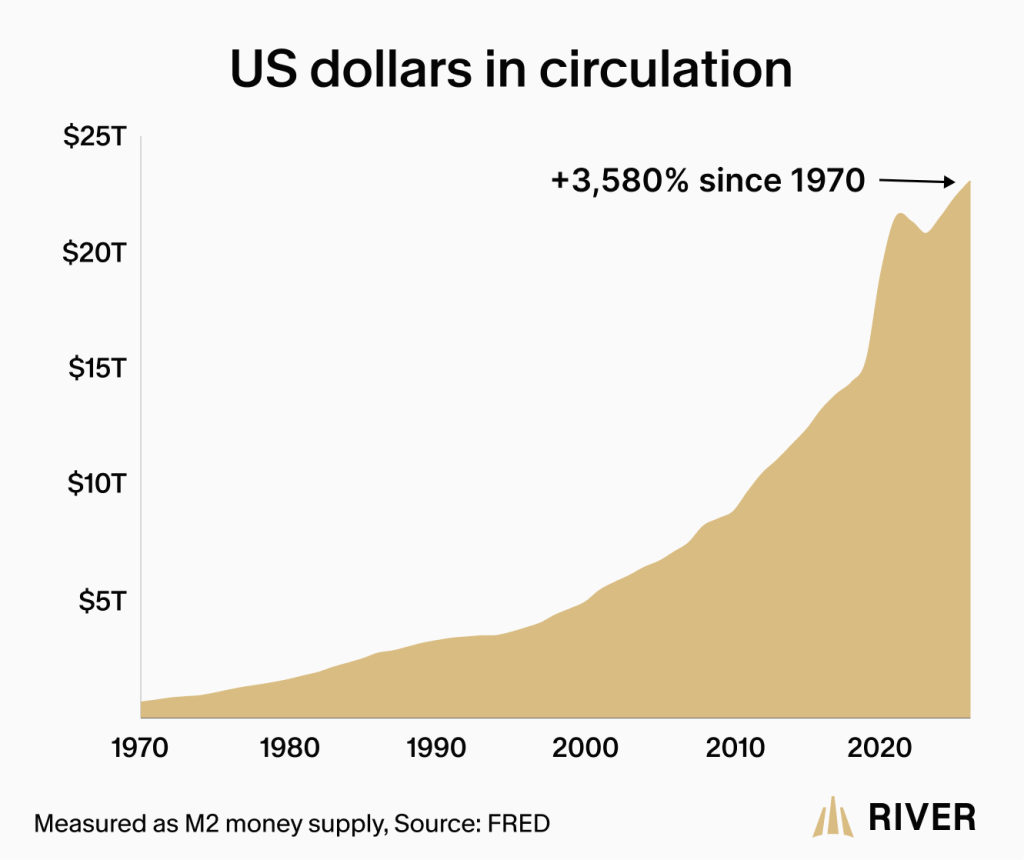
The US dollar is a fiat currency, which means it’s backed by nothing. The government can print new dollars whenever they want. Since 1970, the number of dollars has grown by roughly 7% every year—an increase of 3,580%.
Why does the government do this?
It’s much easier to take on debt than it is to raise taxes or cut spending. Politicians lose elections when they raise taxes, but rarely get blamed for borrowing, which is ultimately paid off by printing more money.
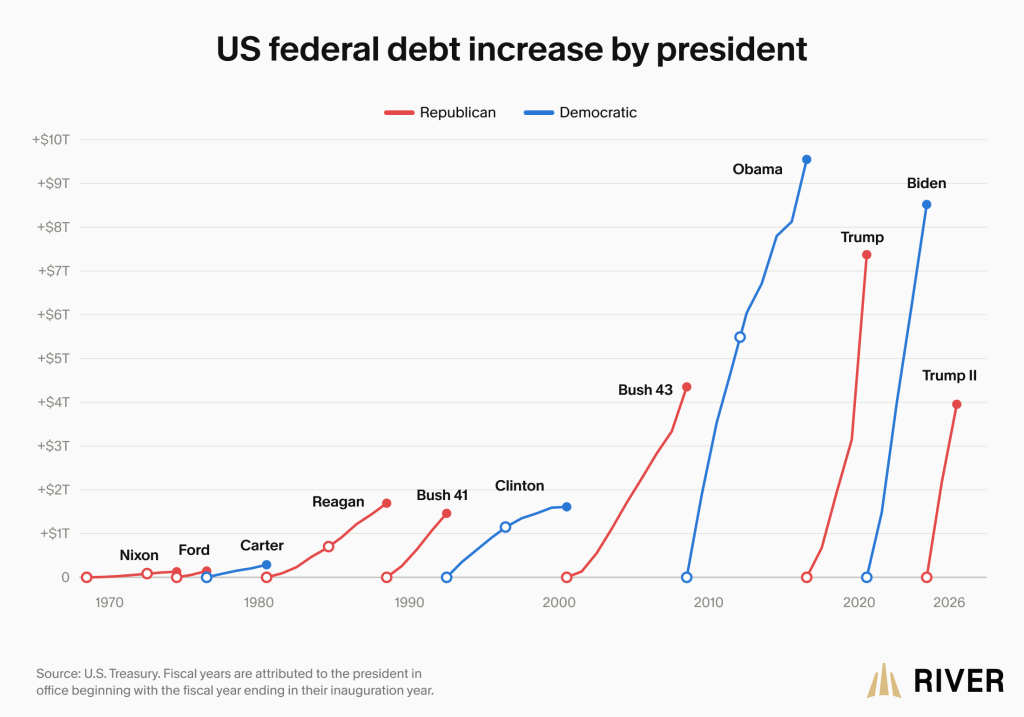
Most people don’t realize that inflation is a form of taxation, one that quietly transfers wealth from your pocket to the government.
It wasn’t always this way. Before 1971, foreign governments could trade dollars for gold at $35 an ounce. This system limited the amount of money the government could create.
In 1971, President Nixon removed the dollar’s gold backing. Since then, government spending (and therefore our debt) has been unconstrained. We pay for this debt with newly printed money.

As the money supply grows, people have more money to spend and invest. This doesn’t create wealth, but rather reduces the value of all existing dollars.
Because there is more money chasing the same amount of goods, prices go up over time.
Money printing shows up first in asset prices, like stocks, gold, and houses. This is called asset price inflation.
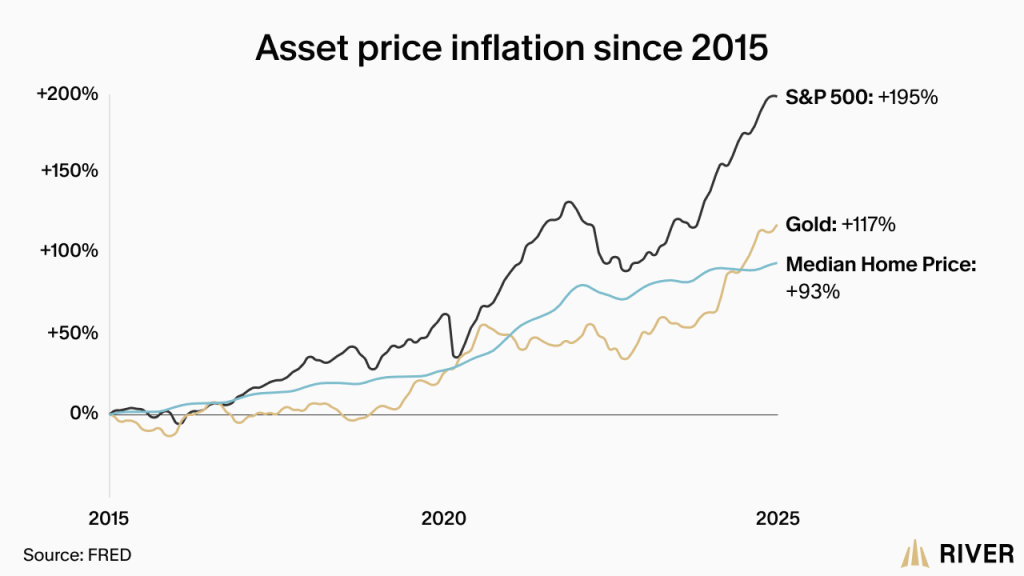
You may think it’s a good thing that the stock market keeps going up, but much of that “growth” is just inflation in disguise. It means many investors think they’re getting rich, while they’re actually just barely keeping up.
Middle and lower-class Americans don’t own many stocks or assets, so they don’t benefit from asset price inflation. On the other hand, the top 1% hold most of their wealth in these assets.
It’s no coincidence that the wealth gap began widening in 1971.

Rising asset prices also create distortions in the economy you participate in.
When home prices rise faster than wages, more people choose to live with their parents or rent an apartment.
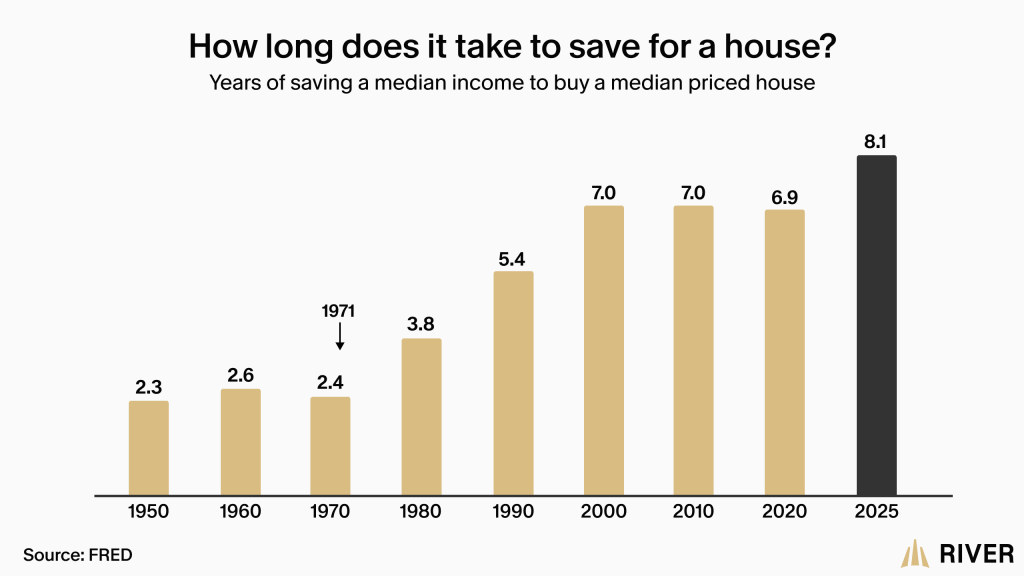
When prices rise faster than wages, people have less money to save.

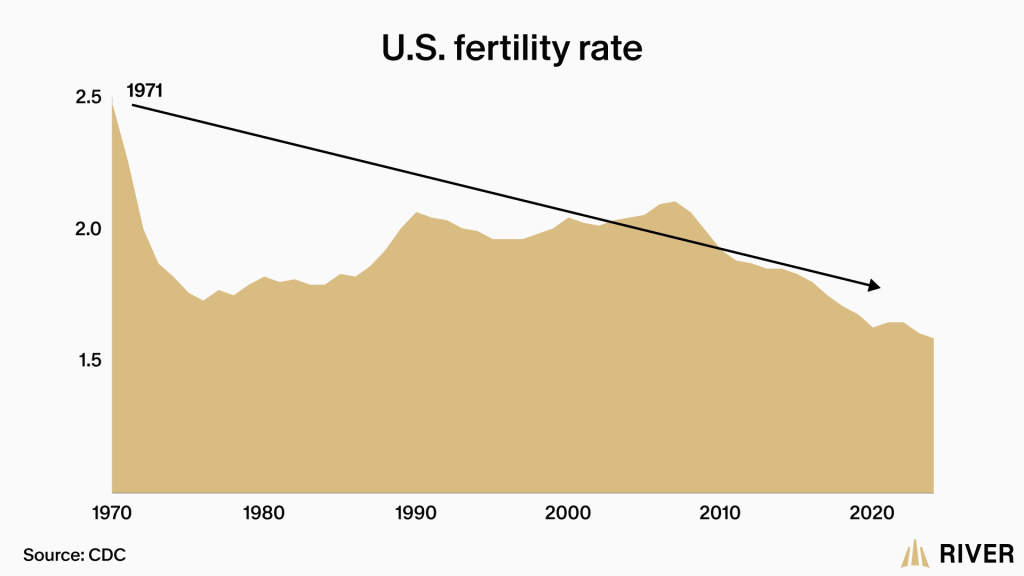
This could partially explain why the fertility rate in the U.S. is falling. Having children is becoming unaffordable.
The hard truth about inflation
Unfortunately, inflation can’t be “solved” by smart politicians.
Just look at the limited options for fixing the budget:
- Raising taxes is unlikely, because nobody will vote for this.
- Cutting spending is just as unpopular and difficult to achieve. Remember how DOGE worked out?
- Supercharging economic growth sounds great in theory, but we’re not close to doing this even with AI advancements.
- The only option that “works” is quietly creating new money to fill the gap. The government has been successfully doing this for over 50 years.
With option #4 as the only viable pathway forward, high inflation may be here for a long time. This comes at the cost of any savings you may try to build up for yourself or future generations.
The good news is that you can take back control.
You can’t vote your way out of this. But you can opt out of it.
The first step is to educate yourself. If you’ve made it this far in the article, you’re off to a great start.
The second step is discipline. Save consistently, but don’t let extra cash sit idle. Every dollar you hold onto loses value while you wait, quietly, year after year.
The third step is ownership. Hold assets that can’t be printed, such as gold and bitcoin. At River, we help our clients do exactly this: take ownership of their cash savings, their bitcoin holdings, and ultimately, their financial futures.