Bitcoin is up nearly 50% from its June low, including a gain of more than 10% in the past week. This price action has caught many investors by surprise, because bitcoin has diverged from previous bear markets. It now looks more likely that the bear market is over.
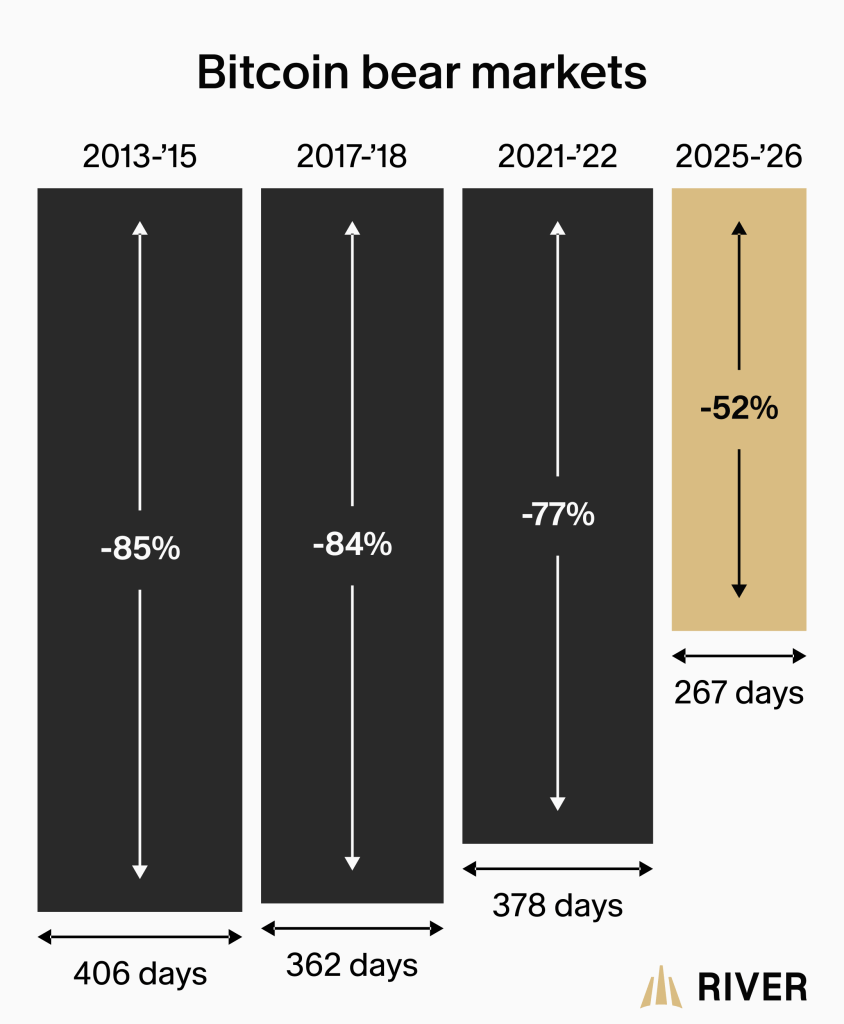
If the bear market is truly behind us, it was the shortest on record by nearly 100 days, and was also the shallowest. Bitcoin fell 52% from its peak, compared with drops of 77% to 85% in past cycles.
Bitcoin’s rally is also surprising because it happened despite last week’s news that would normally weigh on the price:
- The Federal Reserve raised interest rates, and the market is already pricing in another hike this year. Higher rates tend to hurt assets that don’t pay interest, like gold and bitcoin, because they make cash and bonds more attractive by comparison.
- The pro-crypto CLARITY Act stalled in the Senate. The act would have set clear rules for the industry: which digital assets count as securities, commodities, or stablecoins, and which regulators oversee each. The failed vote likely ends its chances for 2026. Bitcoin fell 4% on the news, then kept climbing.
So what’s pushing bitcoin higher? The answer may surprise you.
When an asset’s price rises sharply, trading volume usually rises with it. Higher volume signals that more investors want in. For example, when a company posts a strong earnings report, buyers rush into the stock. Trading volume jumps, and the share price climbs.
That hasn’t happened with bitcoin. Trading volume on exchanges is 30% lower than it was at the start of the year. Bitcoin ETFs have bought about 18,000 BTC so far this month, which is below their monthly average since they launched in 2024.
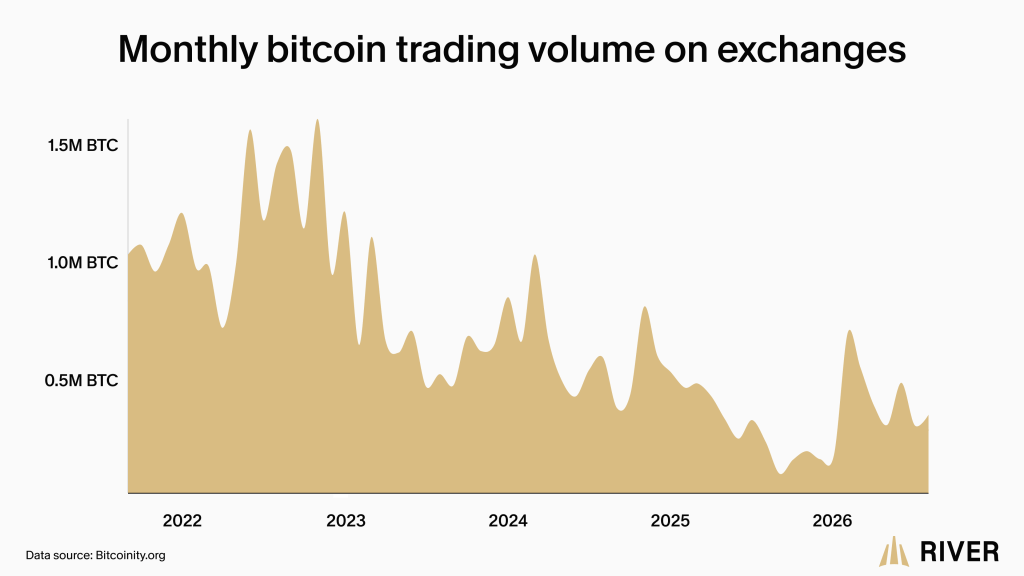
In other words, demand for bitcoin hasn’t meaningfully increased in recent months.
If demand isn’t driving this rally, it means this price action is supply-driven.
Bitcoin has a fixed supply of 21 million coins, and more than 20 million are already in circulation. Over time, a growing share of that supply has moved into the hands of long-term holders.
The chart below shows this trend. Today, 81% of all bitcoin in circulation hasn’t moved in at least six months. Long-term holders have added more than 3 million BTC since 2020, and they’re still accumulating.
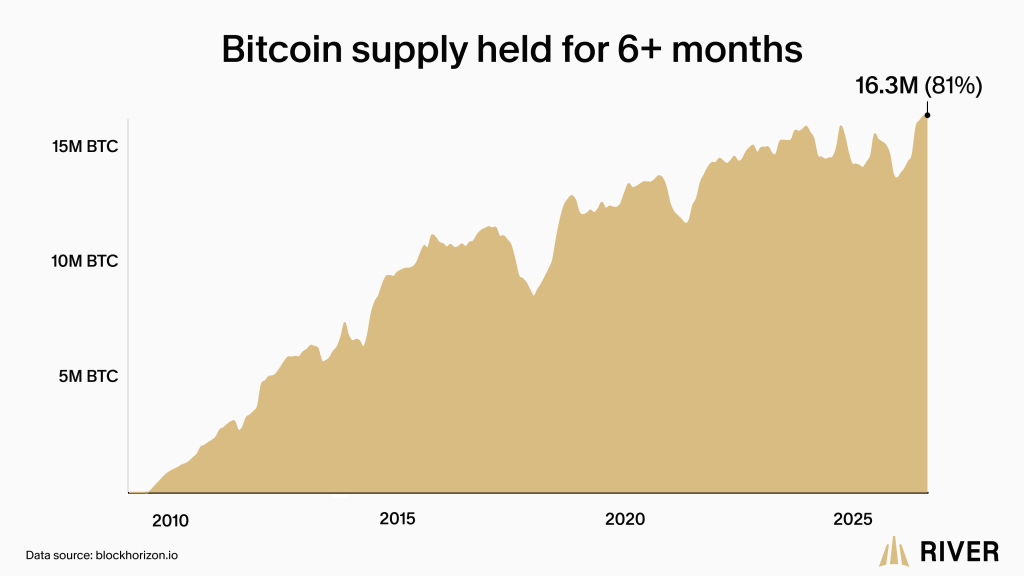
That growth came despite heavy selling from early holders. According to Galaxy Research, nearly 4 million BTC dormant for three or more years moved in 2024 and 2025.
The market absorbed it all, and that selling now appears to be fading. Only about 300,000 of these older coins moved in the first half of 2026.
The transfer of coins to long-term holders speeds up in every bear market. As the price falls, short-term traders sell, and long-term investors happily buy more at a discount. Coins keep moving from traders to long-term holders until no one is left who is willing to sell at the current price.
That’s where bitcoin is today. It’s also what makes this rally unique: Bitcoin has risen 50% without a real increase in demand. The price increase can’t be explained by a news headline or large shift in investor sentiment. The price has climbed because bitcoin’s supply is becoming increasingly scarce.
Past bull markets have been driven by new demand: fresh buyers arriving, trading volume climbing, and inflows accelerating. None of that has shown up yet.
No one can predict when demand will return, and bitcoin’s price will likely stay volatile along the way. But the supply side of the market has already tightened. What’s missing is a genuine increase in demand. When that arrives, bitcoin’s next bull market will truly begin.