Over the past two days, bitcoin’s price rose by 12% to $72,000, its highest level in nearly three months.
What caused this rally? Is it just another bounce in a long bear market, or the beginning of something different?
Why did bitcoin’s price rise?
There are a few explanations for bitcoin’s jump to $72,000:
- Treasury buybacks: On Wednesday morning, the US Treasury announced it will double the size of long-term US government debt buybacks to at least $4 billion per month. This is a subtle form of yield-curve control, in which the government fixes the interest rates it pays on debt by printing money. Immediately after this announcement, hard assets like gold and bitcoin rose sharply.
- Short liquidations: Bitcoin’s sharp price move caused a cascade of short liquidations, where traders betting against bitcoin were forced to exit their positions by buying it back. More than $1.2 billion of shorts were liquidated in just 60 minutes.
- Seller exhaustion: The price rose because few people are left who are willing to sell their bitcoin. Between May and July, ETFs sold more than 90,000 bitcoin. Long-term holders have sold more than 2 million bitcoin over the past 24 months. Over the past month, this selling pressure has abated. Most investors who planned to sell during the bear market have likely already done so. In this environment, a small amount of buy pressure can create large upswings in price.
Is the bear market over?
The average bitcoin bear market lasts 382 days and sees the price fall by 82%. The current bear market is now 318 days long, with the price down by 42%.
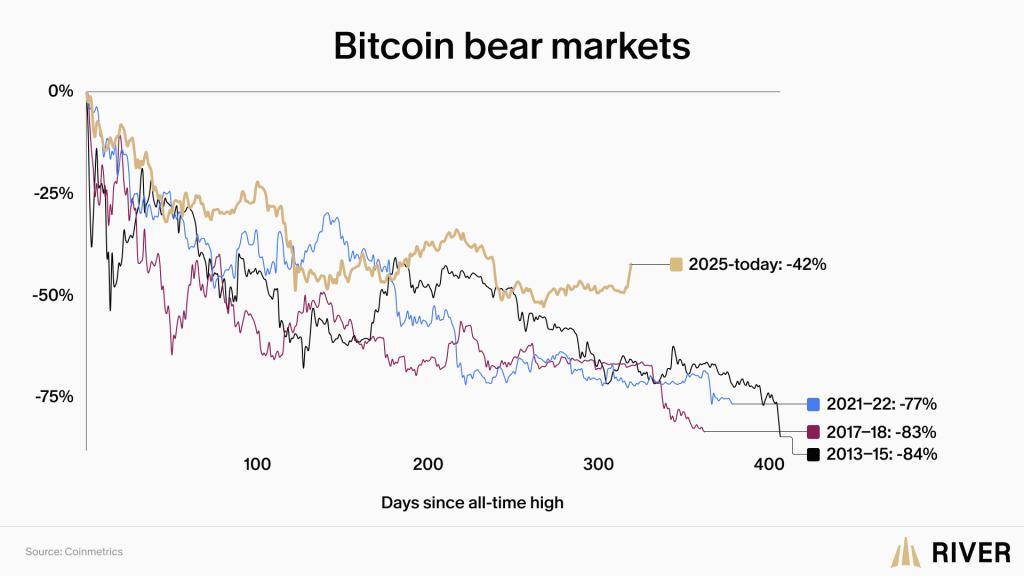
The bear market may already be over. If so, it ended after 267 days on June 30th, when the price hit $58,000 (down 53% from all-time high). Here are a few reasons why this may be the case:
- Bitcoin’s volatility is declining: As the market has grown and institutionalized, bitcoin’s volatility has declined. Last year’s bull market was less extreme than previous cycles, which may suggest a shallower bear market.
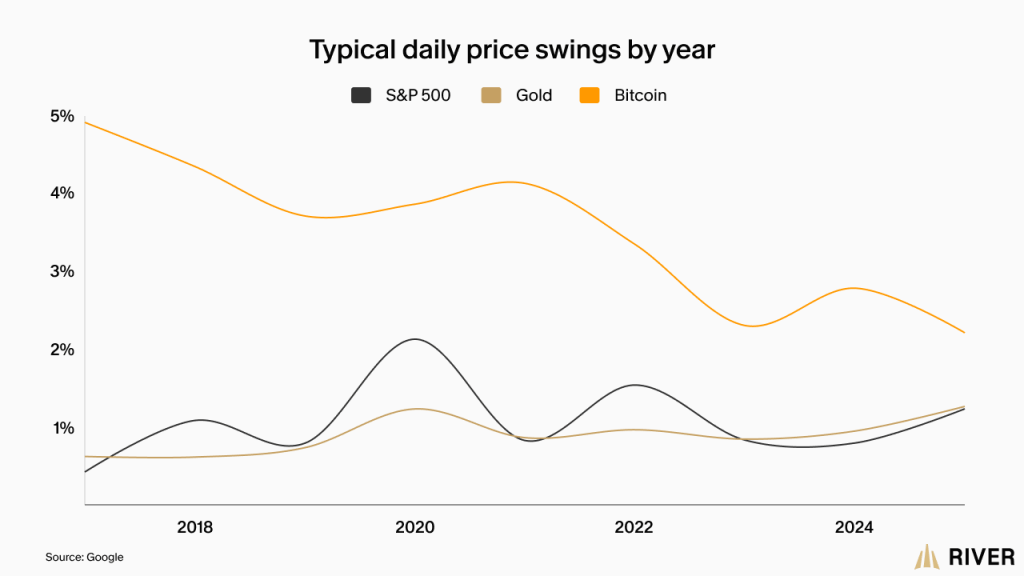
- Bitcoin is attracting a much larger pool of investors: Institutional investors represent a large, steady source of demand, regardless of bitcoin’s price. As adoption continues, capital inflows to bitcoin are likely to grow.

- The fundamental case for bitcoin is as strong as ever: Bitcoin’s main value proposition is that it is a scarce store of value that no one can manipulate or create more of. In a world where everything is changing at an accelerating pace, bitcoin is one thing that remains unchanged.
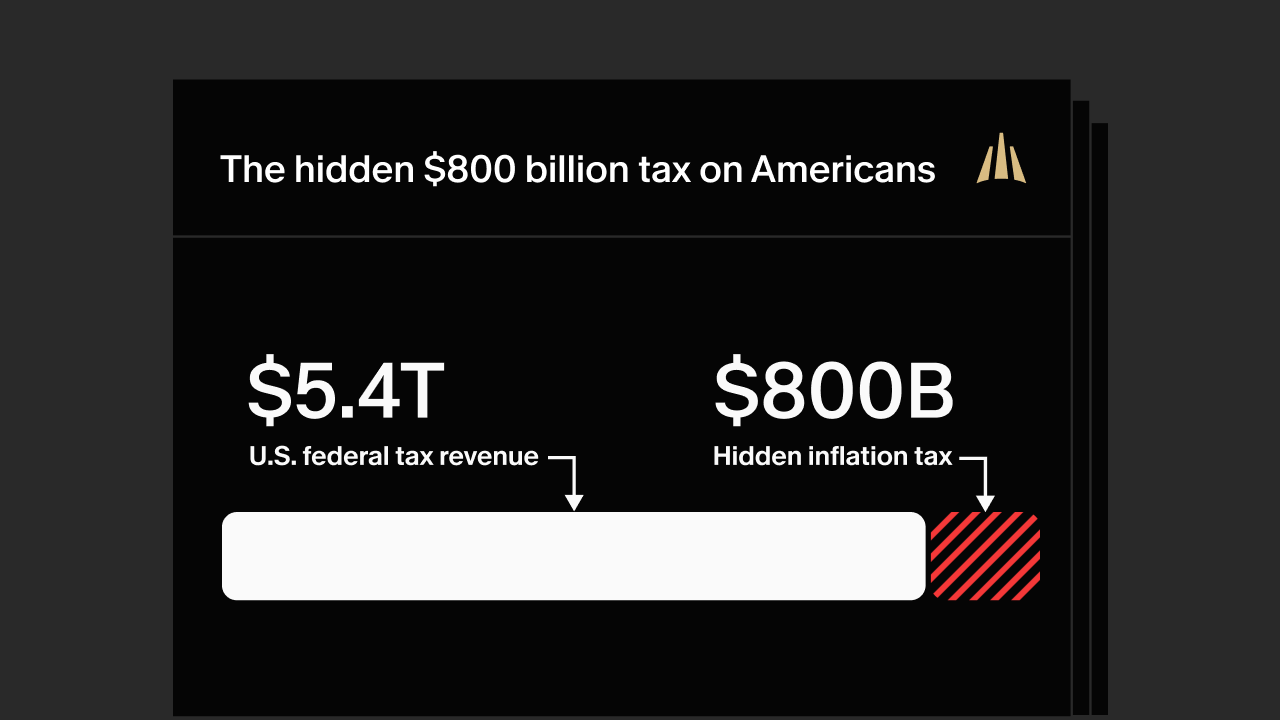
The government’s debt just passed $40 trillion while inflation has remained above the Fed’s “target” for over 5 years, averaging more than 4% over this period. Politicians and the Federal Reserve both appear content to let these issues continue. This is an environment that favors sound money.
Still, bitcoin is difficult to predict, and the bear market may not be over. Bitcoin operates on its own timeline. There is no need to rush, chase gains, or speculate about its short-term price movements. What matters is that the fundamental thesis is unchanged: Bitcoin, as a scarce, decentralized digital asset, is still the antithesis to money printing by governments and central banks.
We hope you can sit back, stack sats, and enjoy the rest of the summer.