Last Friday, bitcoin fell below $60,000 for the first time since late 2024, capping a week of nearly 20% losses. Bitcoin is now down roughly 50% from its all-time high last October.
There’s no single explanation for bitcoin’s price decline. Instead, a few stories are converging at once. Below, we break down the two that matter most, plus a handful of smaller factors adding to the pressure.
1. Doubts about bitcoin’s biggest buyer
For most of the past year, a single company has dominated bitcoin demand: Strategy (formerly MicroStrategy). So far in 2026, Strategy has bought more than 171,000 bitcoin, or roughly 1,075 per day.
Much of this buying has been funded with credit, which is costing the company ~$1.7 billion per year in interest payments.
Strategy’s playbook can pay off if bitcoin rises over the long run. But in a bear market, a falling price raises the question of whether Strategy can keep funding both the enormous purchases and the interest payments.
Right now, the company holds only enough cash to cover interest payments for about seven months. To keep operating well beyond that, it will need to either raise money by issuing new stock or sell some of its bitcoin.
Last week, Strategy sold 32 bitcoin. In dollar terms, the sale was tiny: about $2 million in a market that trades billions every day. But it broke the assumption that Strategy is a buyer that never sells.
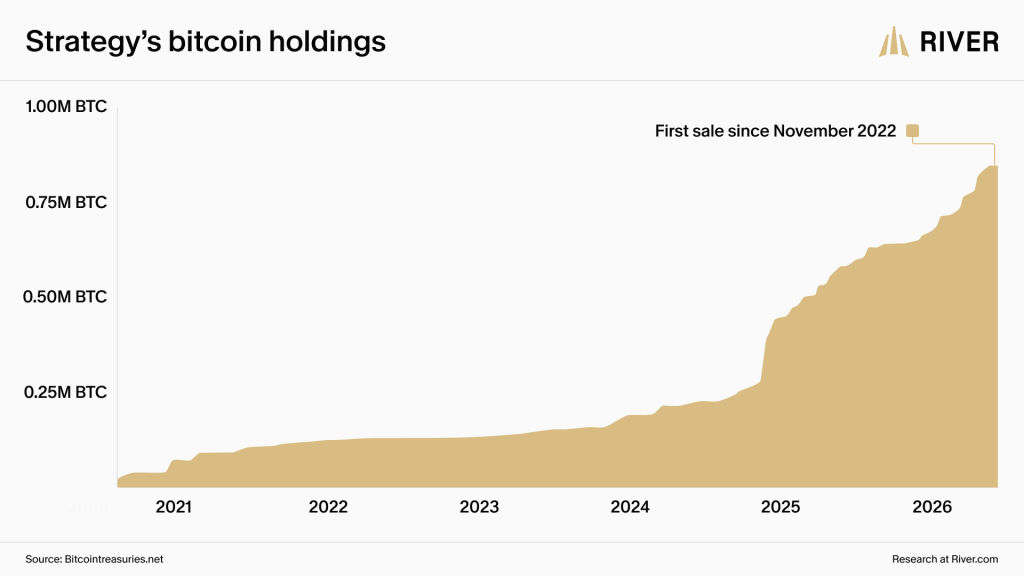
The good news is that, because of how Strategy is structured, it won’t be forced to dump large amounts of bitcoin due to a margin call (where a borrower must sell assets quickly to meet debt repayments). The bad news is that without strong investor demand for its stock, Strategy may be unable to buy bitcoin at anywhere near the pace so far in 2026.
In short, part of last week’s decline likely reflects the worry that bitcoin’s largest buyer is about to become a far less aggressive one.
2. AI is pulling capital out of all other asset classes
Artificial intelligence has become the dominant trade in markets. Over the past year and a half, a growing share of speculative, growth-seeking capital has moved toward AI stocks and private AI companies.
This Friday, SpaceX is set to go public in what will likely be the largest IPO in history, aiming to raise roughly $75 billion. Behind it, AI leaders like OpenAI and Anthropic are laying the groundwork for their own offerings in the months ahead.
Large IPOs tend to act like a vacuum on market liquidity. Investors sell existing positions to free up money for the new shares. Bitcoin is especially exposed here, because many of the investors eyeing these AI and tech listings are the same people who would otherwise be buying bitcoin.
This has happened in the past. On April 14, 2021, Coinbase went public in what was the largest crypto IPO in history. On the very same day, bitcoin topped at $64,800 before falling 50% by mid-May.
Other contributing factors to the selloff:
Several other headwinds piled on last week:
- Forced selling. Some traders risk their bitcoin through leveraged trading. They aim to earn outsized payouts when they’re right, but when the market moves significantly in the opposite direction, they are forced to sell their bitcoin into the market. As prices fell last week, leveraged traders were liquidated out of more than $2 billion in bitcoin.
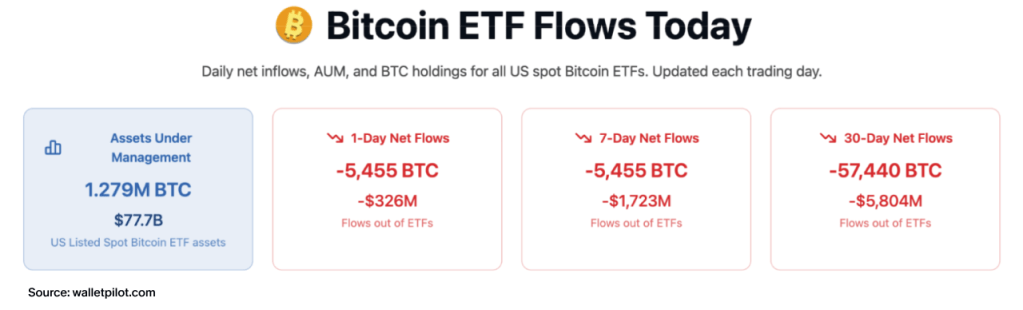
- ETF outflows. U.S. spot bitcoin ETFs just saw 13 straight days of withdrawals (about $4.4 billion), and have sold nearly 60,000 BTC over the past month. This is the longest selling streak since they launched.
The broader context of the current bear market
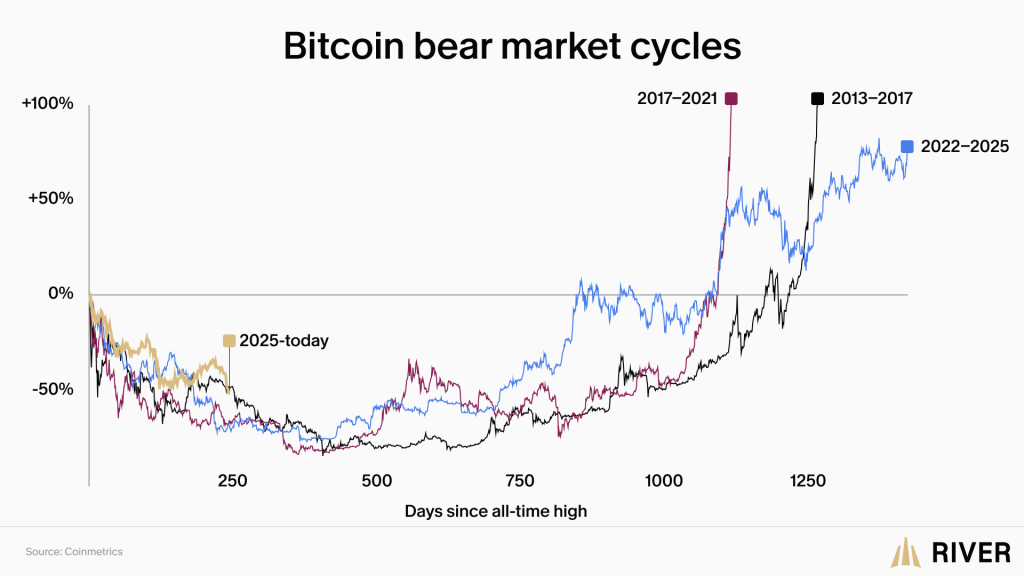
So far, this downturn has been shallower than bitcoin’s past bear markets. Here is what is noticeably different:
- The increasing institutionalization and size of the bitcoin market has caused bitcoin’s volatility to decline over time. Last year’s bull market was less extreme than previous cycles, which may suggest a shallower bear market.
- Bitcoin adoption has been steadily progressing across businesses, investment advisors, individuals, and national governments. Unlike previous cycles, these new adopters will provide a steady source of demand regardless of bitcoin’s price. To learn more about where bitcoin adoption stands, we recommend reading our report from earlier this year.
No one can say for certain whether the bottom is in, and anyone claiming to know exactly where bitcoin goes next should be treated with skepticism. However, those with conviction on bitcoin’s long-term potential will see this period as an opportunity to add to their stack.
If you’re wondering what to do, the basics still apply:
- Don’t invest more than you can afford to lose.
- Avoid trying to time short-term price moves, and avoid taking on leverage.
- Keep a long-term mindset.
The reasons people own bitcoin haven’t changed. It’s the scarcest asset in a world of endless money creation. With each day that passes, the case for bitcoin becomes clearer.